Flexibility As We Age
How To Do a Lunge
There are three main types of lunges: front lunges, back lunges, and side lunges. In doing each type, keep your feet parallel and pointing forward. The distance between your feet should be shoulder-distance; you’re not walking a tightrope with one foot directly in front of the other!
For performing front lunges, take a step forward and make sure your entire foot is planted on the ground. Your front knee should be directly aligned over the toe, not too far forward causing you to lean and lose your balance. Your shins should be parallel and straight. On the back leg, think about your tailbone reaching down to the floor. Your shoulders should be in line with your hips. You are looking for the straight lines of your body, like in ballet. Imagine how Barboza would do a lunge, and apply the same principles to the lunge position.
The position for back lunges is similar, but you take a step back instead of forward. The spacing between your feet should be the same: shoulder distance. Knee-over-toe alignment is the same, as is the alignment of the shoulders over the hips and the connection of the tailbone to the floor. According to the Times of India, back lunges are more
Beginner-friendly, as it is easier to control your body movement while performing this exercise
When it comes to side lunges, take a big step out to the side, planting your entire foot on the ground. You still want to make sure you are keeping your feet parallel and toes pointing forward. The foot you stepped with is the leg that bends and bears all the bodyweight for the lunge.Read Also: Live Your Best Life in Your 60s
The opposite leg stays straight and holds much less body weight. Look for the alignment of the knee over the toe, and also keep the shins parallel and straight. It is important to keep your chest up and back straight as you lean forward over your knee. Make sure your heel does not lift off the floor in this lunge so that you don’t lose your balance and fall forward. Your hips dictate how low you will go into your lunge, so make sure to shoot your hips back to counterbalance your chest leaning forward. Think about connecting your tailbone to your heel.
Enhancements for Lunges
Lunges in every position can be made more challenging in a variety of ways. No matter what, the exercise can always be enhanced by dropping deeper into the lunge and making sure your form is correct. You will get the most out of the lunge when you focus on these things.
When you are doing bodyweight lunges, try speeding them up as you step. You may also want to try adding a jump from a left lunge to a right lunge. In addition to the extra burn to your legs, your heart rate will increase as well and help you burn more calories.
You can also add weights to your lunges. Depending on whether you use dumbbells or a bar, there are many ways to give your legs an extra challenge by holding the free weights. Dumbbells can be held in your hands and down to your side as your lunge. They can also be racked to your shoulders, and even pressed up as you take a lunge step. With a bar, you can hold it at your chest or even behind your head resting on your shoulders. When using either type of weight, you could even incorporate a bicep curl while lunging to work the upper body at the same time. Add a jump to the weighted lunges for even more of a challenge!
Modifying Lunges
Any exercise can be modified, including lunges. It is important to realize that a modification does not mean “less than” or “less capable”. By choosing to modify lunges, you choose to put a greater focus on form, on protecting joints or muscles that may be injured, and on getting the most out of the move for the greatest amount of time possible.
Lunges target the quads, glutes, hamstrings, calves, and even your core. There is a lot of engagement and balance and focus that is required to be able to do the exercise correctly. One of the best ways to modify lunges is to reduce your range of motion. To do this, you do not go as deep into the lunge when you take a step. You can also come out of the lunge by stepping directly up to standing, rather than pushing off the lunge leg. Some may even choose to strengthen their lower body by doing squats or another exercise instead of lunges, in the case they are protecting their knees or other joints.
Benefits of Lunges
Flexibility for Lunges brings the following benefits for you.
Core Stability
Keeping proper posture and alignment while doing lunges engages your core and helps you build stability. According to NDTV, “A stronger core allows you to deal with lower back pain and improves your balance and posture, as well.”
Better Balance
Lunges train your body asymmetrically, or one side at a time. Training this way can help improve your balance and coordination.
Strengthens Legs and Booty
As previously mentioned, your legs include some of your body’s largest muscle groups and lunges target them effectively. These muscles include the quads, glutes, hamstrings, and calves.
Hip Flexibility
Doing lunges regularly can increase the flexibility in your hip flexors. The step into and push-back from the lunge engages and strengthens the iliopsoas muscles, making them more resilient and flexible over time.
Better Spinal Health
Lunging with good posture effectively works your back muscles, as well as allows spinal deloading. According to Fit and Me, “A stronger core and stronger legs mean that those particular muscles help support you more, thus taking the strain off of your back and supporting it greatly.” Protect your spine by considering Barboza posture as you exercise with your best Flexibility for Lunges.
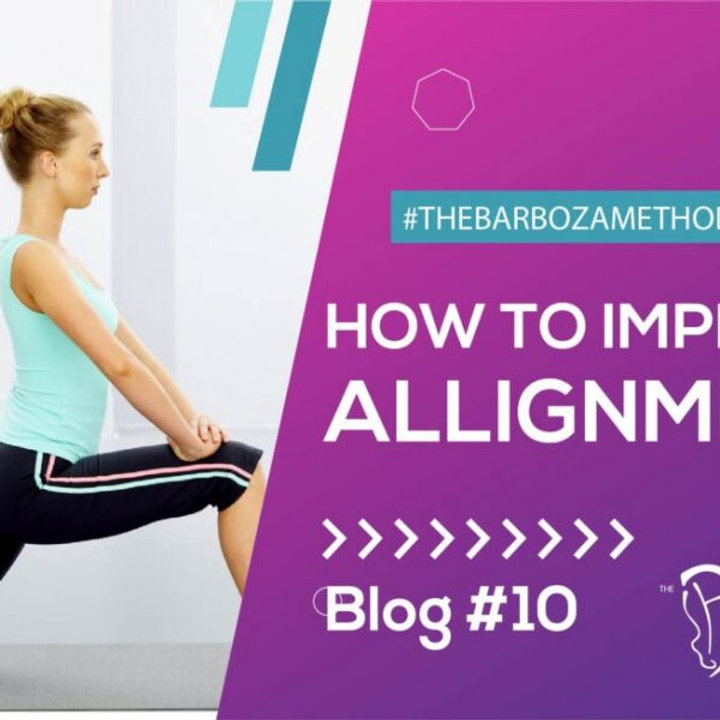
Recommended For You: How to Improve Alignment
Ways To Improve Flexibility
There are multiple factors that can affect flexibility, and we know that one of them is age. Typically, pre-adolescents and younger children are more flexible than adults. Gender can also be a factor, as females are generally more flexible than males. If you have been injured, the stage you’re at in recovery may also limit your range of motion.
We know that regular stretching, and starting to do so as soon as possible, is one of the best ways to approach improving your flexibility. There are some other things to consider when improving your performance as well. Be aware of the temperature of a joint and its tissues, as well as the temperature of a room, and know that warmer is better for working your muscles, tendons, and ligaments to a greater range of motion. Time of day can also affect your flexibility, and most individuals’ bodies peak around 2:30 to 4pm. Be mindful of any restrictions that any clothing or equipment might pose. Your flexibility is also obviously affected by your ability to perform a particular exercise, but don’t be discouraged if you’re not where you want to be yet! Practice makes perfect. Be committed to making a change and improving your body for your future!
Read Also: Flexibility for Lunges
Make a plan to stretch daily. The more flexible you aspire to be, the more you should plan to stretch. If you work in your stretches five times a day, you should start to see improvements in your flexibility in two to four weeks. This progress is all about time and weight: how long you hold the stretch, and the weight you apply in each position.
Stefanie Barboza does not like static stretching. She likes to incorporate movement forward and backward and right to lift to release the muscles. Your body can be too afraid of breaking. Some people are born with more natural flexibility than others. Those who are more easily flexible, however, may lack strength. Those who are stronger may be less flexible. The goal is to even out your strength with your flexibility.
When you stretch, you want to lengthen and strengthen and decompress your body. You may find that an inversion table helps, as it creates space in between vertebrae. Barboza classes emphasize space between the hips and rib cage and holding for both the best position and best body alignment.
Stretches to Try For Flexibility
Standing Hamstring Stretch- hamstrings, calves, glutes, back, neck
- Stand tall with your feet hip-width apart, knees slightly bent, arms by your sides.
- Exhale as you bend forward at the hips, lowering your head toward the floor, while keeping your head, neck and shoulders relaxed.
- Wrap your arms around the backs of your legs and hold anywhere from 45 seconds to two minutes.
- Bend your knees and roll up when you’re done.
Lunge with Spinal Twist- hip flexors, quads, back
- Start standing with your feet together.
- Take a big step forward with your left foot, so that you are in a staggered stance.
- Bend your left knee and drop into a lunge, keeping your right leg straight behind you with your toes on the ground, so you feel a stretch at the front of your right thigh.
- Place your right hand on the floor and twist your upper body to the left as you extend your left arm toward the ceiling.
- Hold for 30 seconds to 2 minutes.
- Repeat on the other side.
Frog Stretch- hips
- Start on all fours.
- Slide your knees wider than shoulder-width apart.
- Turn your toes out and rest the inner edges of your feet flat on the floor.
- Shift your hips back toward your heels.
- Move from your hands to your forearms to get a deeper stretch, if possible.
- Hold for 30 seconds to 2 minutes.
Butterfly Stretch- hips, glutes, back
- Sit tall on the floor with the soles of your feet together, knees bent out to sides.
- Hold onto your ankles or feet, engage your abs, and slowly lower your body toward your feet as far as you can while pressing your knees toward the floor.
- If you’re too tight to bend over, simply press your knees down.
- Hold this stretch for 30 seconds to 2 minutes and Flexibility will be your gift.
Child’s Pose- back, shoulders, glutes
- Start on all fours.
- Walk your arms forward a few inches and curl your toes under.
- Push your hips up and back halfway toward your heels.
- Push through the palms of your hands to keep your arms straight and engaged.
- Hold for 30 seconds to 2 minutes.
Downward dog- hamstrings, calves, back, shoulders
- Start in child’s pose.
- Keeping the feet together, straighten the legs and push the heels into the floor.
- Push your palms into the floor, keeping your arms straight.
- Your body should form a 90-degree angle.
- Arch your chest forward toward your fingertips.
- Lift your hips high, and pull your bellybutton in toward your spine.
- Hold for 30 seconds to 2 minutes and enjoy Flexibility.